

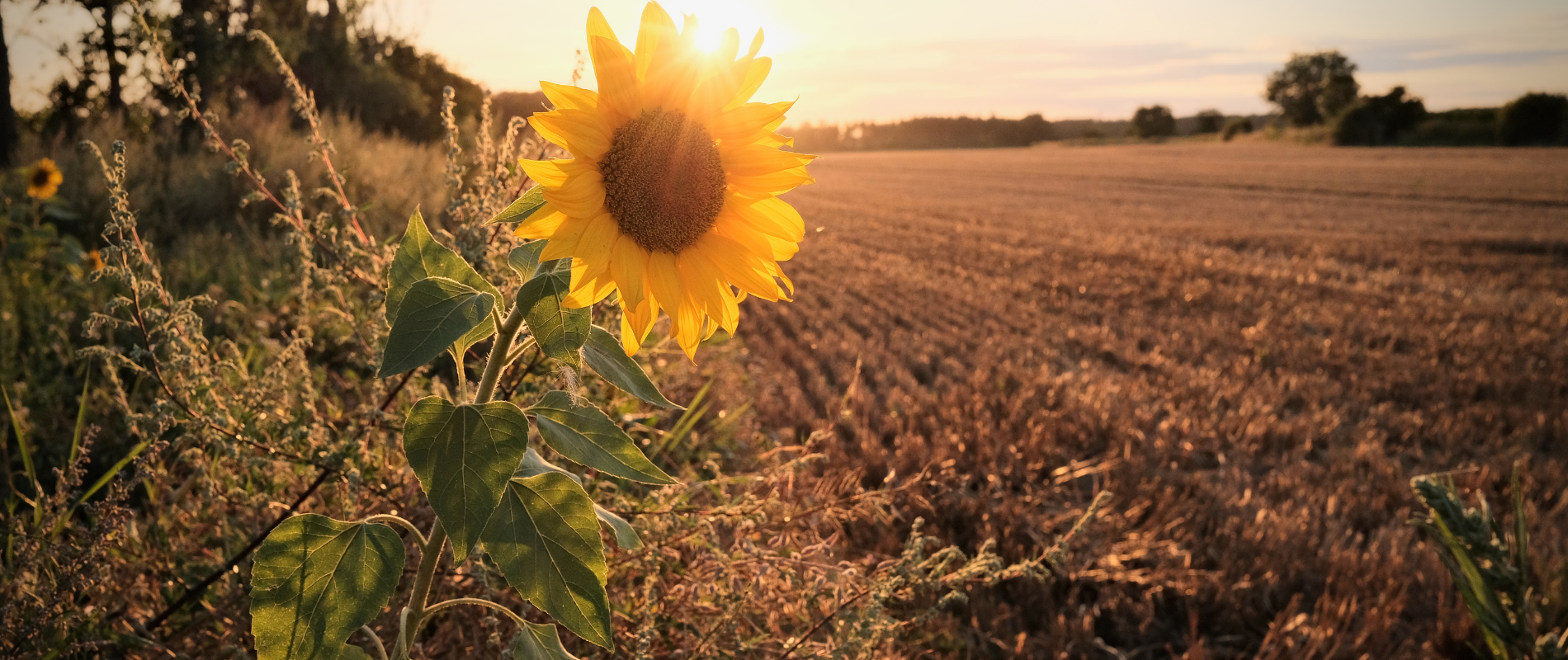
When does autumn begin?
You probably immediately think of September 21.
Or was it September 22? Or September 23?
And then suddenly on September 1 you hear a weather forecaster say:
"Today marks the beginning of meteorological autumn."
Huh?
While you might still be sitting outside in a T-shirt and summer doesn't seem to be over at all.
How does that work?
The surprising answer: autumn actually has two start dates. 🍂
When does meteorological autumn begin?
For meteorologists, it's very simple:
Autumn begins every year on September 1.
Meteorological autumn consists of three full calendar months:
- September
- October
- November
So on November 30, meteorological autumn is over again, and meteorological winter begins on December 1.
But why do meteorologists consider autumn to begin on September 1?
Why does meteorological autumn begin on September 1?
It is mainly for practical reasons.
Meteorologists work extensively with averages and compare the weather of different months, years, and seasons.
For this purpose, it is much more convenient if each season consists of three full calendar months.
The meteorological seasons are therefore divided as follows:
Spring: March, April, and May
Summer: June, July, and August
Autumn: September, October, and November
Winter: December, January, and February
This way, all meteorological seasons last exactly three months and can easily be compared with each other.
Fun fact: this method of division is not new at all. As early as 1780, one of the first international weather organizations decided to always consider three consecutive calendar months as one season.
So weather forecasters don't just announce that autumn has begun on September 1. 😉
And when does astronomical autumn begin?
This brings us to the autumn that most people know.
The astronomical autumn usually begins on September 22 or 23.
The exact date can vary slightly from year to year.
This has everything to do with the Earth's position relative to the sun.
Our Earth does not orbit the sun perfectly upright, but is tilted slightly. Because of this tilt, the amount of sunlight received by the northern and southern hemispheres changes throughout the year.
And that is what gives us our seasons.

What happens on the first day of astronomical autumn?
Around the beginning of astronomical autumn, the sun is directly above the equator.
We call this moment the autumn equinox or night evening.
Around this time, day and night are approximately equal in length.
After that, days become shorter and nights longer in the northern hemisphere.
Until we reach the shortest day of the year in December.
From that point on, fortunately, we start heading in the right direction again. 😉
So… when does autumn really begin?
Both answers are correct.
September 1
→ beginning of meteorological autumn
Around September 22/23
→ beginning of astronomical autumn
Which date you use therefore depends mainly on what you understand by the beginning of autumn.
For a meteorologist, it is autumn on September 1.
Astronomically speaking, we still have a few weeks to wait.
And for ourselves?
Well…
Maybe autumn simply begins on that first morning when you walk outside and think:
Ooh. I should have brought a jacket. 😉
But why does September 1 often not feel like autumn at all?
Because the weather naturally doesn't care about our calendar at all.
On September 1, it can be chilly, grey, and rainy.
But it can just as easily be beautifully sunny and warm.
We can also still have wonderfully warm days in September and even October. We, of course, know this wonderful tail end of summer as the Indian summer.
So meteorological autumn absolutely does not mean that we automatically have to say goodbye to mild weather from September 1.
And thank goodness for that.

When does it really feel like autumn?
There is, of course, no official date for that.
For some, the feeling of autumn begins as soon as the first leaves change color.
For others, when it suddenly gets chilly in the morning.
Or when you zip up your jacket and go outside again for the first time after summer.
And there are, of course, those typical signs:
- the days become noticeably shorter
- it feels chillier in the morning
- leaves start to change color
- the wind picks up more often
- rainy days suddenly feel a lot less summery
- you reach for a jacket again in the morning
But that can happen earlier one year than the next.
And actually, that is exactly what makes the transition from summer to autumn so enjoyable.
One day you are still walking outside without a jacket.
The next morning you think:
Where did I leave my softshell jacket again?
Curious why a softshell is so great on these kinds of changeable days?
Read here: Why you will want a softshell in autumn
What kind of jacket do you wear at the beginning of autumn?
That depends much more on the weather than on the date on the calendar.
Still mild and rainy?
Then a light, unlined, and breathable raincoat is often just right.
You stay dry during a shower, but you won't immediately be in a jacket that is far too warm when the temperature is still above 20 degrees.
Are you going to school or the office again daily? Then this is exactly one of those periods when the difference between a light raincoat, softshell, or longer cycling raincoat becomes important.
Back to work: which raincoat do you wear to school or the office?
Chilly morning and changeable weather?
Then a softshell jacket is wonderful.
The soft fleece on the inside provides just a little extra warmth, while the jacket is windproof and breathable. Ideal for chilly mornings when it gets milder later in the day.
And what if it gets really cold?
Then the time will naturally come when the lined rain and winter jackets can come out of the closet again.
Or maybe yours is already waiting there. 😉
Ready for the changeable season? 🍂🌧️
From a light raincoat for mild days to a softshell for chilly mornings and a warm winter jacket for later in the season.
At Hipinderegen you will find stylish raincoats that are waterproof, windproof, and breathable – jackets you don't just put on because it's raining, but because you simply think they look good.
View the waterproof autumn jackets
Prefer to look ahead? View everything for autumn & winter.



Share:
Back to work: which rain jacket should you wear to school or the office?
Is your raincoat ready for autumn? Here’s how to freshen it up