

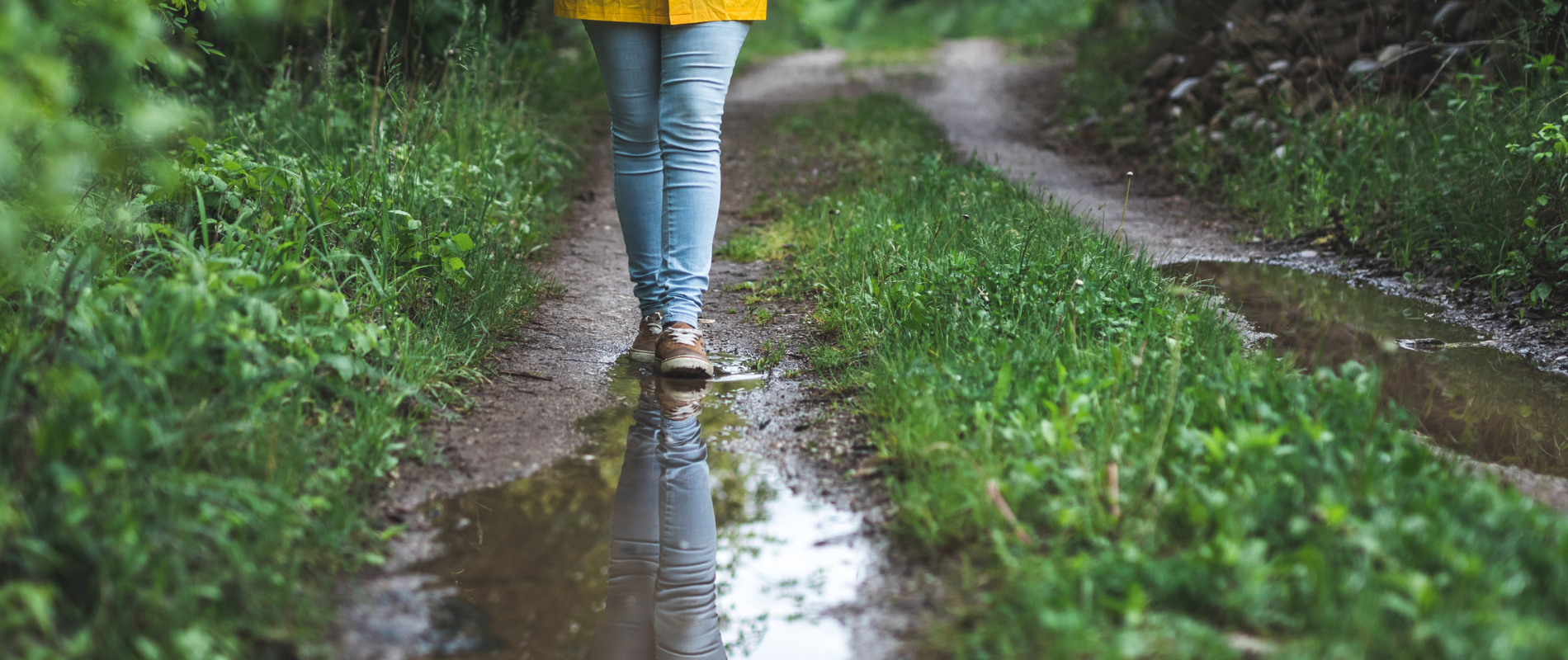
After weeks of sun and warmth, something special happens as soon as the first rain falls.
The smell of wet earth.
Drops on dried leaves.
Grass that slowly seems to turn greener again.
And almost the feeling that all of nature breathes a sigh of relief.
Finally, rain.
But what actually happens to nature when it starts raining after a long dry period?
And is one heavy downpour enough to make up for weeks of drought?
Spoiler: unfortunately not.

🌱 The top layer of the soil gets water first
When it starts to rain gently, the water slowly penetrates the soil.
This is important for plants and grass, as their roots absorb moisture from the ground.
However, after a long dry period, the soil can be quite parched. How much of the rainwater actually reaches the ground depends, among other things, on the type of soil, the vegetation, and how hard it rains.
During a heavy downpour, water sometimes falls faster than a dried-out soil can absorb. Some of it then runs off, instead of slowly soaking into the ground.

🌧️ A massive downpour doesn't just solve drought
It sounds logical:
Lots of rain = end of drought.
But it's not that simple.
Even if the grass looks beautifully green again a few days later, there can still be a lack of moisture deeper in the soil and the groundwater level can still be low.
Drought develops over a longer period.
And its recovery also takes time.
🌳 Trees and plants finally get some air again
For plants and trees, rain after a dry period primarily means that new moisture finally becomes available again.
During drought, plants try to minimize water loss as much as possible. Some let their leaves droop or even shed leaves prematurely.
After rain, the soil can supply moisture to the roots again.
And sometimes you see that surprisingly quickly.
A lawn regains color, plants perk up, and the garden suddenly seems a lot livelier within a few days.
But large trees with deep roots certainly don't get enough from one rainy afternoon.

☔ And then that smell...
Do you know that typical smell when it finally starts raining after a long dry period?
There's actually a word for it:
petrichor.
The scent arises, among other things, because substances from plants and micro-organisms accumulate on and in the soil during dry periods. When raindrops hit the ground, tiny particles of these can be released into the air.
And that is the smell we strongly associate with rain after a warm, dry period.
We previously wrote an entire blog about it.
Petrichor: the enchanting scent of rain.
🌿 Why one rainy day is actually quite welcome
We tend to find rain mostly inconvenient.
Just when you want to cycle.
Just when you've planned a walk.
Or of course, precisely when you've left the house without a coat. 😉
But after weeks of warmth and drought, you suddenly look at such a grey day very differently.
The temperature drops.
Nature gets water.
The air feels fresher.
And outside suddenly smells wonderful.
Perhaps a rainy day isn't such a bad trade after weeks of sun.

🚶 And us? We can just go outside
Nature has no choice when it starts to rain.
Luckily, we do. 😉
But staying indoors is not necessary.
Especially after a warm, dry period, being outside can be wonderful. The temperature is more pleasant, it smells fresh, and walking paths are often much quieter.
With a good rain jacket, it hardly matters whether the sun breaks through again along the way or if there's another shower.
🌦️ Rain is part of it
Perhaps that is the beauty of Dutch weather.
Nature needs both sun and rain.
After a long dry period, one rain shower is not enough to immediately replenish all deficiencies. More time and more precipitation are needed for that.
But those first drops?
They are at least a start.
So next time after weeks of sun, when it finally starts to rain, look outside a little differently.
Put on your rain jacket.
Take a walk.
And take a good sniff.
Chances are, nature is just as happy with that rain as you are with the fresh air. 🌿
Going outside? View our rain jackets



Share:
Why are summer rain showers often so heavy? ⛈️
Softshell jacket: why this is the perfect jacket for spring and autumn