

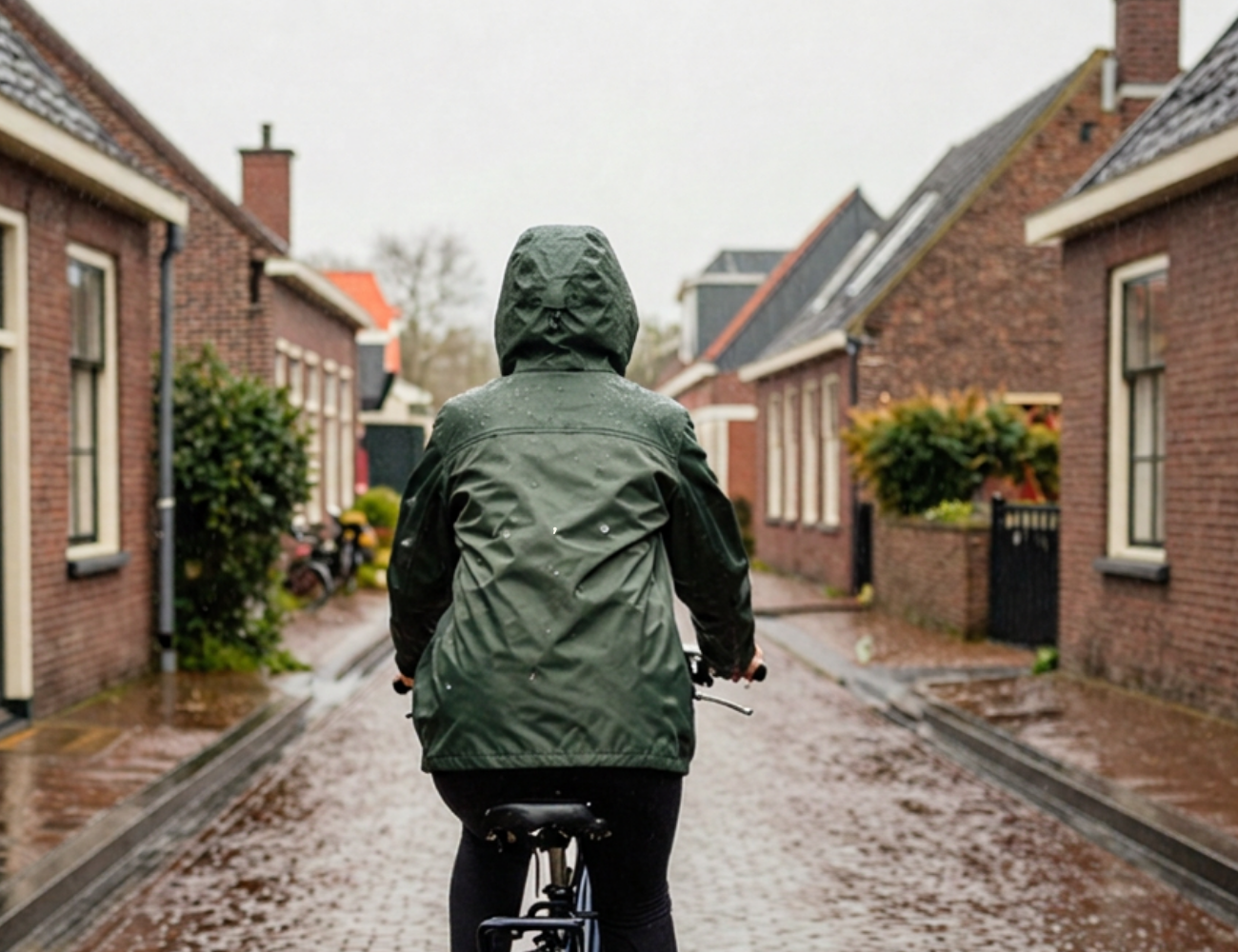
You put on a waterproof rain jacket.
You pull up the hood.
Zip it up.
And full of good spirits, you get on your bike.
Half an hour later, you arrive and think:
How can I be clammy? My jacket is waterproof, isn't it?
Chances are the water isn't coming from outside at all.
But from within.

Waterproof does not automatically mean breathable
A rain jacket actually has two different tasks.
It needs to keep rain out.
But during movement, your body produces heat and moisture. You want that moisture to escape outward as much as possible.
And that's where the breathability of a rain jacket comes into play.
A jacket that is excellently waterproof but barely breathable can cause heat and perspiration to accumulate inside.
The result?
A clammy feeling.
Even if not a single drop of rain has gotten through your jacket.
What does breathability mean?
With technical rain jackets, you sometimes see a second number next to the water column.
For example:
10,000 g/m²/24 hours
This number indicates how much water vapor can be transported through one square meter of material in 24 hours under test conditions.
In general: the higher the number, the greater the material's ability to wick moisture outwards.
But here too, one number never tells the whole story.
Fit, ventilation, temperature, humidity, exertion, and the clothes you wear under your jacket all play a role.

You especially notice the difference if you move a lot
A leisurely stroll to the shop is different from a vigorous twenty-minute bike ride.
The more active you are, the more heat and moisture your body produces.
That's why breathability becomes increasingly important when you:
- cycle a lot
- walk briskly
- take the dog out for a long time
- are outside for extended periods
- get warm quickly during exercise
A good rain jacket for active use should therefore not only prevent rain from entering.
It must also help to get rid of moisture from within.
Is 15,000 always better than 5,000 then?
Not automatically.
Just like with a water column, you have to look at the usage.
For short distances and calm daily use, your requirements may differ from when you hike for hours or cycle through all weathers every day.
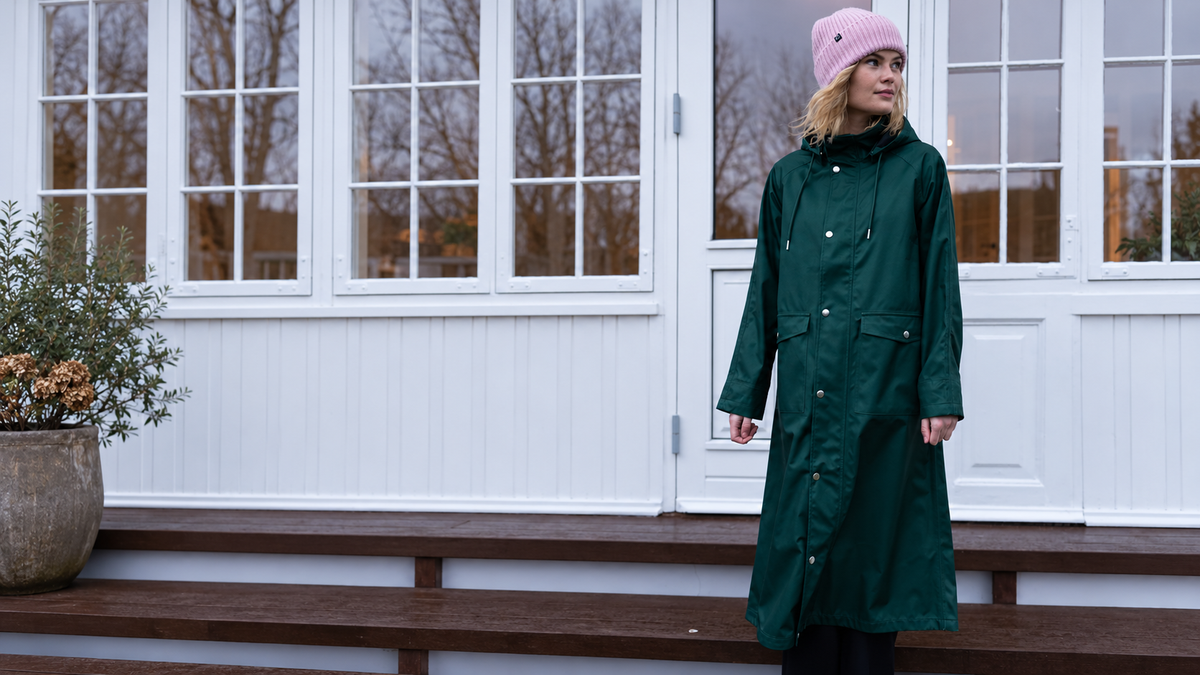
A jacket like the Danefæ Dogwalker, for example, combines a water column of 15,000 mm with a breathability of 15,000 g/m²/24 hours.
Precisely that combination makes such a jacket interesting for people who are actively outdoors for longer periods.
 View the Danefæ Dogwalkers here
Often outdoors, even when it rains?
Then don't just look at how waterproof a jacket is, but also at its breathability.
View our waterproof rain jackets
What you wear under your rain jacket also counts
No matter how technically good your rain jacket is: if you wear the wrong layers underneath, you can still get clammy.
Materials that wick moisture away from your skin are often more comfortable for active use than clothes that trap perspiration.
Too many layers can also simply make you too hot.
And then even the most breathable rain jacket cannot prevent you from sweating.
Ventilation helps
Sometimes the simplest solution is surprisingly effective.
Open your jacket a little when it stops raining.
Use a 2-way zipper from the bottom up when cycling.
And don't automatically put on a thick sweater just because it's raining outside.
After all, rain doesn't automatically mean it's cold.
Especially not in summer 😉.
So... is your rain jacket leaking?
If the inside of your jacket feels clammy, the first thought is often:
"My rain jacket is leaking."
But that doesn't necessarily have to be the case.
Consider when it happens.
Are you cycling or walking vigorously? Is it warm outside? Are you wearing multiple layers? Does the entire inside feel clammy instead of one specific spot?
Then perspiration and condensation can be a much more logical explanation.
If water consistently comes in at one specific spot during rain, for example near a seam or zipper?
Then there might indeed be a leak.
A good rain jacket is all about balance
So, simply looking at the highest water column is not enough.
A good rain jacket suits what you do with it.
Waterproofness keeps rain out.
Breathability helps moisture escape from within.
And only when these two perfectly match your usage will you realize how much more comfortable being outside in the rain can be.

Dry from the outside and comfortable from the inside
At Hipinderegen, we therefore look further than just the word 'waterproof'.
Water column, breathability, seams, length, and fit together determine which rain jacket suits you.
Ready for rain without that sticky rain jacket feeling?
Share:
A raincoat in summer: isn't that far too warm?
Why are summer rain showers often so heavy? ⛈️